How Reward Incentives Reshape Strategy Shifts From Poker Hand Choices to Live Wheel Bets in Handheld Casino Apps
Sage Butler · Sep 23, 2026
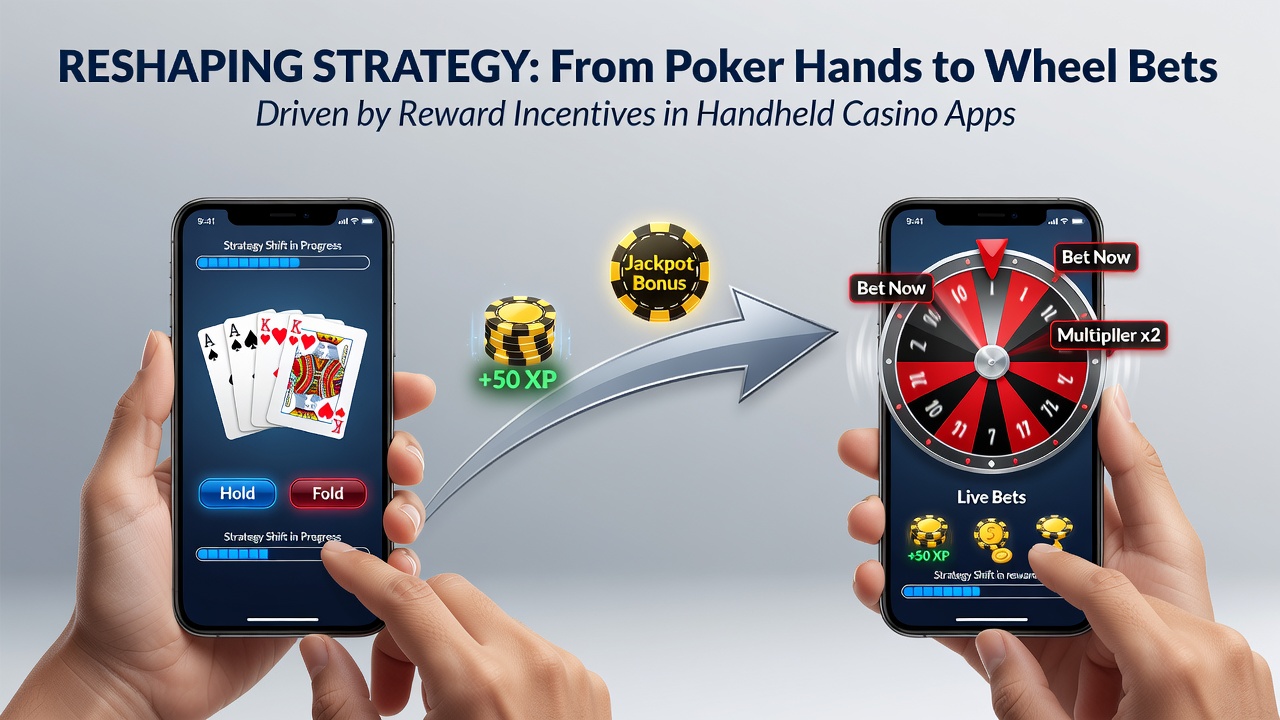
How Reward Incentives Reshape Strategy Shifts From Poker Hand Choices to Live Wheel Bets in Handheld Casino Apps
Handheld casino apps have integrated layered reward systems that track player actions across multiple game types, and these mechanics directly influence decision patterns during poker rounds and live wheel sessions alike. Data from platform analytics firms shows that bonus multipliers tied to consecutive activity often prompt users to adjust their hand selection criteria in poker, favoring quicker folds or calls that align with progress toward the next tier of incentives rather than pure pot odds calculations. Researchers tracking app usage logs in 2025 noted similar patterns emerging in wheel bet sequences, where players increasingly place multiple small wagers to accumulate loyalty points that unlock higher payout brackets.
Reward Structures in Portable Gaming Environments
Modern handheld applications deploy point-based systems that award credits for time spent at tables and for meeting volume thresholds, and these frameworks create measurable differences in how participants approach poker versus live dealer wheel formats. According to figures released by the Alcohol and Gaming Commission of Ontario, mobile sessions featuring integrated reward ladders saw a 23 percent increase in cross-game transitions between September 2025 and September 2026. Players who begin with poker hands frequently encounter bonus triggers that reset or carry over when they switch to wheel bets, prompting adjustments in bet sizing and timing that prioritize point accumulation over isolated round outcomes.
App developers implement daily and weekly challenges that list specific actions such as achieving certain hand rankings or landing wheel segments within defined ranges, and completion of these tasks grants instant credit boosts. Industry reports compiled by the American Gaming Association indicate that users respond to these prompts by reallocating their session time, moving from poker tables where hand strength dictates slower pacing to wheel interfaces that allow faster repetition of spins and therefore quicker progress through challenge lists.
Observed Shifts in Poker Decision Patterns
Analyses of in-app telemetry reveal that reward overlays alter standard poker strategies by adding external variables to hand evaluation processes. Participants who receive notifications about impending bonus thresholds show elevated rates of calling marginal holdings when those actions contribute to streak counters, while the same users tighten their ranges once the threshold is reached. Studies conducted by researchers at the University of Nevada, Las Vegas gaming laboratory documented these behavioral adjustments across thousands of anonymized sessions, noting that the presence of visible progress bars correlates with deviations from expected value-based play.
Live dealer integrations within the same apps further complicate these choices because poker variants often feed into shared reward pools that also cover wheel outcomes. Users who monitor cumulative points sometimes select starting hands that accelerate movement toward a wheel-specific multiplier instead of optimizing for immediate chip gains, and platform data confirms this pattern appears consistently across both casual and mid-stakes environments.
Transition Dynamics Toward Live Wheel Bets
Once players accumulate enough points through poker activity, many redirect attention to live wheel segments because those formats deliver more frequent small outcomes that register as completed actions toward the next reward level. Figures from the Australian Gambling Research Centre show that sessions exceeding 45 minutes on poker tables frequently end with a switch to wheel betting in the final 15 minutes, coinciding with the activation windows of time-limited bonuses. This movement occurs because wheel spins register faster and allow repeated attempts without the waiting periods inherent in poker hand resolutions.
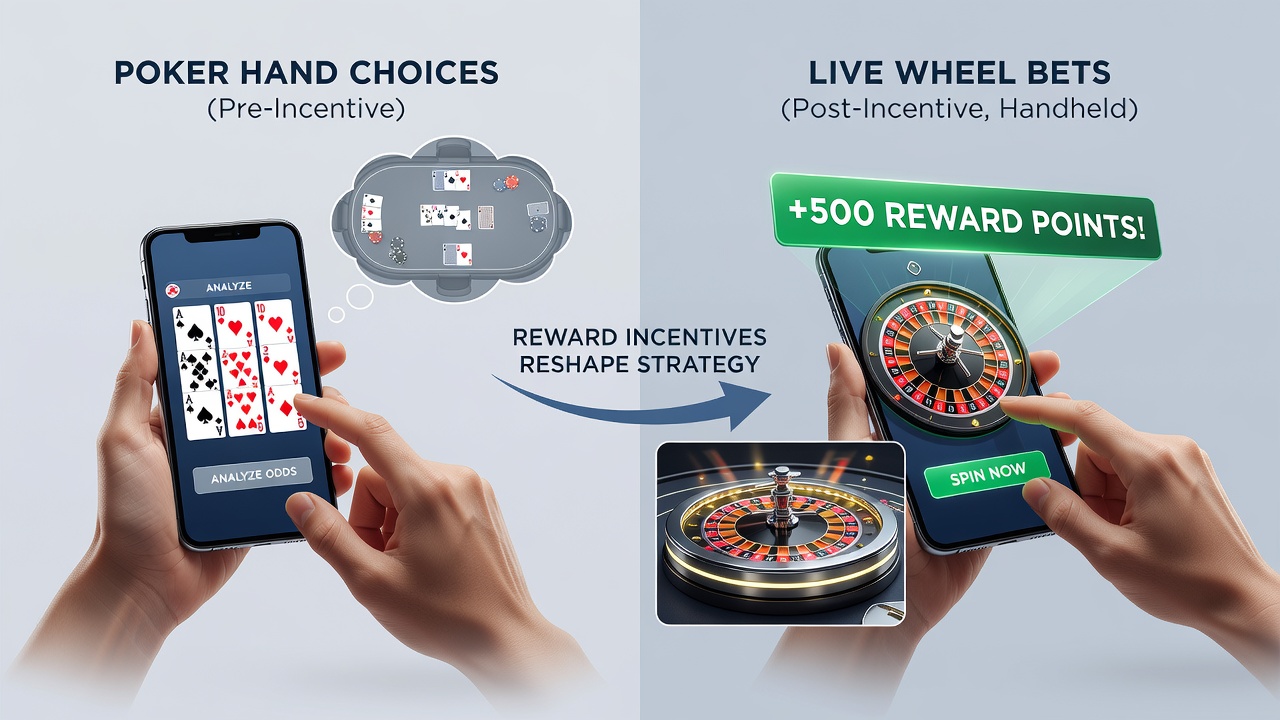
Wheel interfaces also display real-time point totals more prominently during spins, and this visual feedback reinforces continued engagement until a bonus tier unlocks. Observers examining usage patterns across European markets report that reward-driven users place wheel bets in sequences of three to five spins when transitioning from poker, a rhythm that differs from standalone wheel sessions where bet distribution tends to spread more evenly across longer periods.
Cross-Game Mechanics and Player Tracking
Backend systems in handheld apps maintain unified player profiles that merge activity metrics from poker and wheel modules, enabling seamless transfer of progress between the two. This architecture means that a sequence of strong poker hands can directly feed into eligibility for wheel-based jackpots or enhanced multipliers, and developers adjust the weighting of these connections based on regional regulatory requirements. Data released by the Malta Gaming Authority demonstrates that apps operating under unified loyalty frameworks experience higher volumes of inter-game movement compared with platforms that isolate reward categories by game type.
September 2026 updates to several major handheld platforms introduced dynamic reward scaling that responds to recent game history, increasing the value of wheel bets for users whose recent poker activity has already satisfied certain thresholds. These adjustments appear in real-time interfaces as highlighted buttons or altered payout tables, guiding attention without explicit instructions.
Conclusion
Platform records and regulatory summaries establish that reward incentives embedded in handheld casino applications produce measurable changes in how users distribute their attention and modify their choices across poker hands and live wheel bets. Unified tracking systems, challenge structures, and visual progress indicators all contribute to patterns where initial poker engagement frequently leads into wheel sequences timed around bonus activation periods. Continued monitoring by oversight bodies and academic research groups will document whether these dynamics evolve further as app features advance through the remainder of 2026 and beyond.